
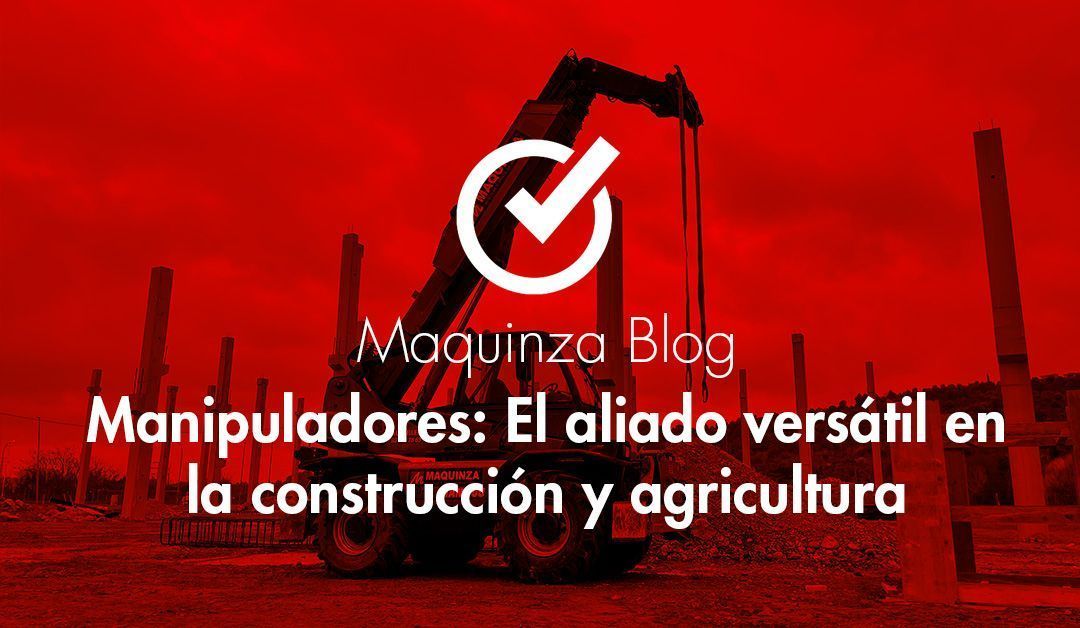
When it comes to versatile and efficient equipment for construction, agriculture, and other industrial sectors, telehandlers have become an indispensable tool. Their ability to combine the functions of a loader, crane, and work platform has made them a valuable resource for multiple applications. But what exactly are telehandlers and why are they becoming so popular? Here we tell you everything you need to know.
What is a telehandler?
A telehandler is a machine equipped with a telescopic boom that extends and retracts to reach considerable heights. This boom can be fitted with different attachments, such as forks, winches, jibs, buckets, cranes, or aerial platforms, making it extremely versatile.
At first glance, it looks like a combination of a forklift and a crane, but its robust design and reach set it apart, allowing it to operate on rough terrain and in applications that require great height and precision.
Main Features
- Reach and lifting capacity
Telehandlers can lift loads to heights ranging from 6 to 25 meters, depending on the model. The load capacity can exceed 5 tons in some cases, making them ideal for moving heavy materials on construction sites or agricultural fields. - Maneuverability
These machines are designed to work on challenging terrains, thanks to their four-wheel drive and ability to turn in tight spaces. Many models also have adjustable steering modes, such as front-wheel, four-wheel, or crab steering. - Attachment versatility
Telehandlers stand out for their adaptability to different tasks thanks to interchangeable accessories. Among the most common attachments are:- Pallet forks.
- Winches for lifting weights.
- Crane hooks.
- Baskets for working at height.
- Jibs.
- Buckets.
- Advanced technology
The latest models include electronic control systems to manage machine stability, safety sensors, and ergonomic cabins that improve the operator’s experience.
Applications in different industries
- Construction
On construction sites, telehandlers are essential for moving heavy materials to different levels, such as bricks, steel beams, or precast concrete. They are also used to install metal structures or for maintenance work at height. - Agriculture
In agriculture, their use is equally valuable. They can load hay bales, spread fertilizers, collect crops, and handle heavy equipment. Their ability to operate on uneven ground makes them ideal for the field. - Logistics industry
In warehouses and ports, telehandlers are useful for loading and unloading containers, organizing inventory at height, and handling bulky materials. - Other sectors
They are also used in mining industries, energy facilities, and public infrastructure projects thanks to their durability and versatility.
Advantages of using a telehandler
- Versatility: A single machine can perform multiple functions, reducing the need to rent or purchase additional equipment.
- Efficiency: Its ability to reach great heights and work on difficult terrain speeds up tasks.
- Safety: Modern systems ensure machine stability, minimizing risks for the operator and the environment.
- Time and cost savings: By combining functions, these machines optimize processes and reduce operational costs.
Things to consider before acquiring one
If you’re thinking of buying or renting a telehandler, it’s important to keep the following in mind:
- Capacity and reach: Assess your project’s needs to choose the right model.
- Type of terrain: Make sure the machine has enough traction and stability to operate in your environment.
- Attachment compatibility: Ensure the model can adapt to the accessories you plan to use.
- Budget: Although telehandlers are a significant investment, their long-term benefits justify the cost.
Telehandlers are an essential tool today thanks to their unique combination of power, reach, and versatility. If you’re interested in renting this type of machinery for your next project, contact us. At Maquinza we have a professional team that will advise and help you choose the ideal option to achieve success in your projects.